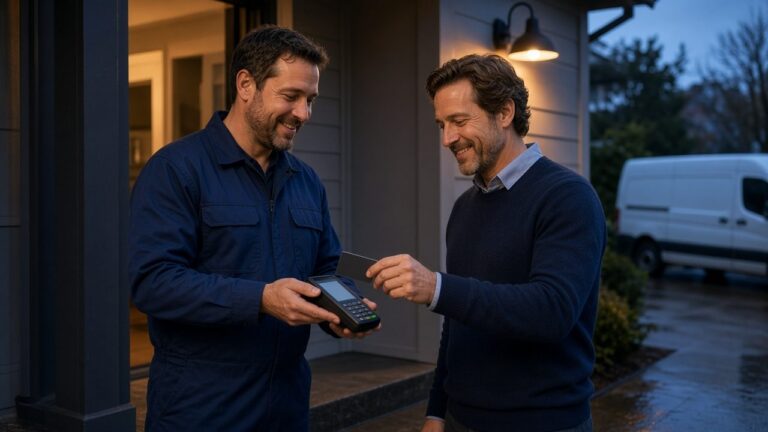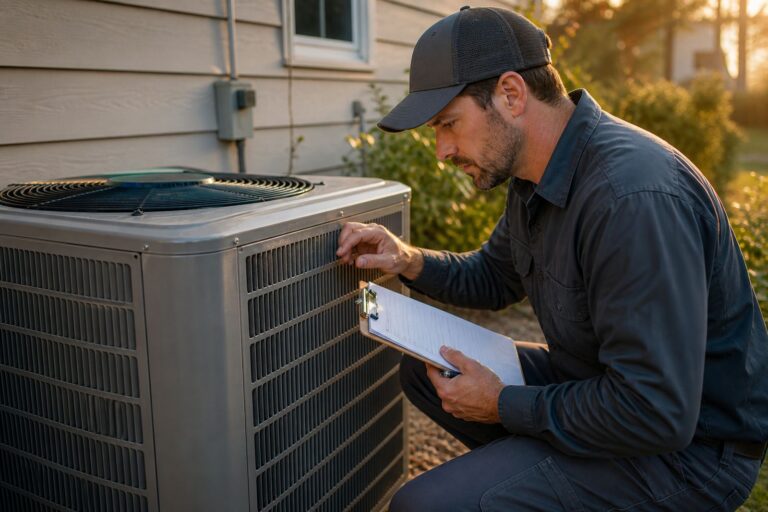

The quote goes out. The tech rolls to the next call. The office phone lights up with a no-heat emergency. By Friday, nobody remembers who was supposed to check whether the homeowner still wanted the furnace replacement.
That is how open estimates die—not because the price was wrong, but because quote follow-up for contractors never became a named job with a named owner. Consistent follow-up is a process: a next date, a clear message, and the discipline to stop when the customer says no. It is not the same as job-status texts (confirmations, ETAs, completion notes)—those belong to field service customer communication. This guide is about what happens after the estimate has already been sent.
Why Open Service Quotes Get Forgotten
Most shops do not ignore quotes on purpose. The work collapses under ordinary chaos.
- No named owner. “The office” is not a person. When anyone can follow up, often no one does.
- No next follow-up date. Without a date on the calendar or board, the quote leaves short-term memory.
- Hard-to-find details. If the scope lives in a personal email thread, the next caller cannot answer a simple question.
- Unclear customer decision. The homeowner is waiting on a spouse, a HOA, financing, or another bid—and nobody recorded that.
- Urgent work wins. Emergencies and same-day jobs outrank “check on that quote from Tuesday” every time.
HVAC shops connecting quotes to customer records and follow-up tasks can go deeper in HVAC CRM software for small business. The process below stays trade-agnostic: it applies wherever you sell work from an estimate.
Prepare the Quote Before Following Up
Follow-up fails when the caller has to reconstruct the job from memory. Before the first check-in, make sure someone can open a single record and see:
- What was quoted (scope in plain language)
- Options the customer saw (if you offered more than one path)
- Any timing or validity notes you already communicated
- The customer’s last known question or concern
- Who owns the next contact
You do not need a pricing seminar to follow up well. You need enough context to be useful. Tools that keep estimates attached to the customer—such as ServLoom’s Quotes & Estimates and estimates workflows—help with continuity; the operating rule is still “one place, one owner.”
A Simple Quote Follow-Up Sequence
Use this as a practical example, not a proven industry standard. Adjust timing for urgency (no heat vs. a cosmetic upgrade), quote size, customer preference, and how long your estimate remains relevant.
Example cadence
- Same day (or within a few hours). Confirm the quote was sent, point to the options, and invite questions. This is confirmation, not pressure.
- After 2–3 business days. Ask whether they had a chance to review it and if anything is unclear.
- Around day 7. Offer help with the decision—clarify scope, walk through options, or answer a known blocker—without inventing urgency.
- Final follow-up. Politely ask whether they want to proceed, pause, or close the quote for now. Leave the door open without camping on their phone.
Between steps, if the customer replies, follow *their* thread—not the calendar. Silence after the final message usually means close or pause the opportunity under your shop’s policy, not another round of identical texts.
Who Should Own Each Follow-Up?
Pick a default model and write it down. Flexibility is fine; ambiguity is not.
- Office / CSR: Owns routine tracking, status updates, and most mid-sequence messages. Best when the question is “Did you get this?” or “Any questions?”
- Technician: Steps in for technical clarification—what was found on site, why an option matters, what happens if they wait. Best when the customer’s hesitation is about the work itself.
- Owner / manager: Handles large jobs, unusual exceptions, or quotes stuck after the CSR and tech have already helped.
One person still owns the *status* of the open quote even when someone else makes a call. Otherwise the sequence restarts from zero every time.
What to Say — Professional Quote Follow-Up Templates
Adapt these examples to your voice and trade. They are starting points, not scripts you must recite word for word.
1. Initial quote confirmation
Hi [Name] — just confirming I sent your estimate for [brief job]. It covers [one-line scope]. Happy to walk through the options if anything is unclear. — [Your name], [Company]
2. First follow-up (questions check)
Hi [Name] — checking in on the estimate we sent for [job]. Did you have any questions about the scope or options? Glad to clarify. — [Your name]
3. Helpful mid-sequence follow-up
Hi [Name] — following up on the [job] quote. If you’re weighing options or waiting on a decision at home, I can help explain what’s included (and what isn’t) so it’s easier to choose. No rush—just here if useful. — [Your name]
4. Final polite follow-up
Hi [Name] — last check-in from us on the [job] estimate. If you’d like to move forward, pause for now, or close this out, just let me know which you prefer. Either way, we’re glad to help when you’re ready. — [Your name]
5. When they need more time
Totally fine — thanks for letting me know. I’ll pause follow-ups for now. When you want to revisit [job], reply here or call [number] and we’ll pick it up from the estimate we already sent.
6. When they decline
Understood — thanks for the update. We’ll close out this quote on our side. If anything changes with [equipment/property] later, you’re always welcome to reach out.
No fake scarcity. No guilt. No “we can only hold this price until tonight” unless that constraint is real and authorized.
Track the Next Step for Every Open Quote
A quote follow-up sequence only works if the next action is visible. At minimum, track:
| Field | Why it matters |
|---|---|
| Quote sent date | Starts the clock |
| Status | Open / waiting on customer / paused / won / lost |
| Last contact | Avoids duplicate pings |
| Next action + date | Makes follow-up a real task |
| Named owner | Ends “someone should…” |
| Customer note | Spouse deciding, wants second opinion, financing, etc. |
This can live in a shared list at first. Many teams prefer the same system that holds the customer and estimate so context does not scatter—ServLoom’s CRM & Sales positioning emphasizes follow-ups and quotes connected to customer history. Whatever tool you use, the rule is the same: no open quote without a next date and an owner.
When to Stop Following Up — and When to Reopen
Stop when:
- The customer declines or asks you not to contact them further
- They state a preference (email only, no texts, call after a date)
- You have completed your planned sequence with no response—then pause or close under a clear policy
Reopen when:
- The customer invites another conversation
- Circumstances change in a way that is relevant (seasonal equipment issue, new leak, approved budget)—and you have a legitimate reason to reach out
- They contact you about a related problem
Do not treat silence as a lifelong invitation to “just checking in” forever. Respect builds more long-term work than persistence theater.
Common Quote Follow-Up Mistakes
- Sending the same message on a loop. If they did not answer “checking in,” try clarity or a close-out—not a clone.
- Calling without reading the quote. Customers notice when you cannot explain your own scope.
- No owner / no next date. Process debt, not a personality flaw.
- Aggressive or guilt-based language. Undermines trust you need if they hire you later.
- Unauthorized discounts or “holds.” Creates pricing chaos and broken promises.
- Treating silence as approval. No reply is not a signed contract.
- Ignoring a clear decline. Close the record and move on.
How Better Quote Follow-Up Fits Into Your Workflow
Strong follow-up sits between two other habits: writing a clear estimate, and booking the job when the customer says yes. Job-stage messaging (reminders, ETAs) stays on the communication playbook; quote chase stays on the open-estimate list. If you are still choosing software to keep quotes and follow-ups in one place, start with how to choose field service software. If you already adopted a system and want to judge whether recovered quotes matter financially, pair this process with field service software ROI—using *your* numbers, not promised close rates.
Frequently Asked Questions
How soon should a contractor follow up on a quote?
Often a same-day confirmation that the estimate arrived is enough for the first touch, then a check-in after a few business days. Urgency, job size, and customer preference matter more than a fixed industry rule.
How many times should you follow up on an unanswered estimate?
Many shops use a short sequence of a few touches ending in a clear close-or-pause message. More volume rarely helps if the messages say nothing new. Decide your policy in advance.
What should a contractor say when following up on a quote?
Reference the specific job, offer to answer questions, and make the next step easy. Avoid pressure and vague “just checking in” with no context.
How do you follow up without sounding pushy?
Lead with usefulness, respect their timeline, and stop when asked. One named owner and a written cadence prevent accidental spam from three different people.
What should you do when a customer says they need more time?
Acknowledge it, pause proactive follow-ups, and note when (if ever) they want to be contacted again. Keep the estimate easy to reopen.
When should you stop following up on an estimate?
After a decline, a no-contact request, or the end of your planned sequence with no response. Close or pause the opportunity so the board stays honest.
How should a business track outstanding quotes?
At minimum: sent date, status, last contact, next action, owner, and a short customer note. Keep it where the quote itself lives whenever you can.
Make Follow-Up a Habit, Not a Hope
Quote follow-up for contractors works when every open estimate has an owner, a next date, and a respectful message ready. Confirm receipt, answer real questions, offer a final clear choice, then stop or reopen for good reasons—not because the week got busy again.
If you want estimates and customer context in one workflow, explore Quotes & Estimates or book a demo to see how ServLoom supports quote-to-job continuity on your real board.