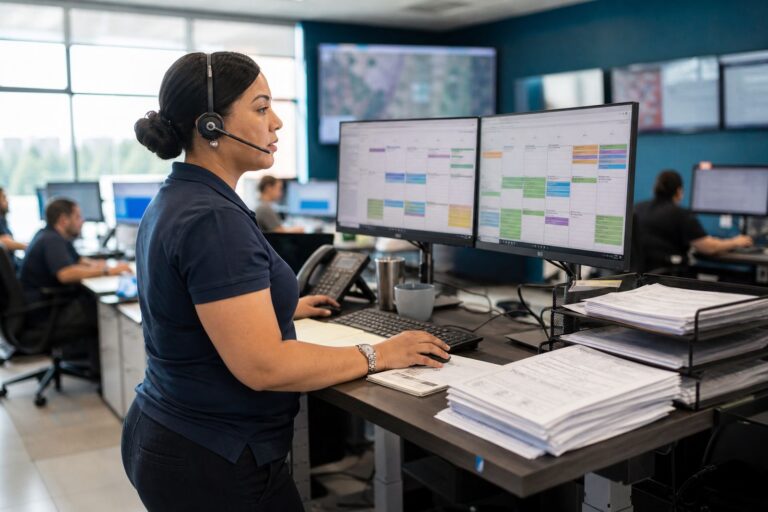

The phone rings at 6:55 a.m. A homeowner smells something burning near a wall outlet. Line two is a small office with half the building dark. Line three is a property manager who wants every receptacle in a vacant unit tested “today.” Your electricians are already rolling to booked panel upgrades, and every caller believes their job is the emergency.
That is the moment electrical emergency dispatch either holds together or collapses. Without a written triage process, the loudest caller gets the first truck, the wrong electrician shows up without the right test gear, and scheduled customers get bumped without a call. This guide is a practical way to run emergency call triage for electrical contractors: what to ask on the first ring, how to sort risk, who to send, and what to tell the customer while they wait.
For the broader daily board routine, use our Busy-Day Playbook for Field Service Dispatchers. Plumbing shops can follow the sibling process in Emergency Call Triage for Plumbing Companies.
Why Electrical Emergencies Need a Written Triage Process
Electrical urgency is hard to judge over the phone. “No power” can mean a tripped breaker, a utility outage, a failed panel, or a dangerous fault. Customers describe what they feel and see, not what is wrong in the circuit, and they are often scared when they call.
A written triage process gives every person who answers the phone the same questions, the same sorting rules, and the same policy for interrupting the schedule. It protects people and property, protects booked installs, and sends electricians out with clear symptoms, access notes, and safety flags—not a blank ticket.
Dispatch intake is not electrical diagnosis. The office keeps callers safe, captures accurate information, and gets a qualified electrician to the right job. Diagnosis and repair stay in the field.
Emergency vs Urgent vs Schedulable Electrical Calls
Every shop defines emergencies a little differently based on its services, staffing, and after-hours policy. Still, most electrical emergencies share one or more of these traits:
- There is a smell of burning plastic or insulation, visible arcing or sparking, smoke, or heat at an outlet, switch, fixture, or panel area.
- Part or all of a building has lost power in a way that creates an immediate safety or access problem (dark stairs, no exit lighting, freezer or medical equipment at risk).
- Water is near electrical equipment, outlets, or a panel.
- A business cannot operate safely without power to critical systems.
- Occupants are vulnerable—elderly residents, infants, or someone with medical needs who depends on powered equipment—when power is out or unsafe.
Just as important: remodel quotes, convenience outlets, a non-working ceiling fan when other lights work, or a non-urgent EV charger install belong in the schedule. They should not jump a call that involves smoke, arcing, or people stuck in the dark.
When there is immediate danger, fire, smoke you cannot control, or risk of electrocution, tell the caller to stay away from the hazard and contact local emergency services. Do not coach them to open panels, touch exposed wires, or investigate live circuits.
Questions Dispatchers Should Ask During the First Call
The first two minutes decide almost everything that follows. Keep a short script by every phone and in your intake form so nobody has to improvise.
- “Is there smoke, a burning smell, sparking, or heat at an outlet, switch, or panel?” This is the primary safety sorting question.
- “Is anyone hurt, and is everyone clear of the area?” If someone may be injured or still near a live hazard, prioritize emergency services guidance first.
- “What went out—one room, half the house, the whole building, or just one fixture?” Scope changes who you send and what they bring.
- “Did the utility report an outage, or do neighbors still have power?” Utility-side outages are not always your truck’s job, but you still need a clear answer for the customer.
- “Is water near any outlets, switches, or the electrical panel?” Tell them to stay away from wet electrical equipment.
- “What kind of property is it, and who will be on site?” Homeowner, tenant, property manager, or business; access codes, lockboxes, pets, parking, and after-hours entry.
- “Is this residential service, a panel issue, commercial lighting, or something like EV charger or equipment feed work?” Job type drives qualification and truck stock.
- “Have you had recent electrical work, storms, or equipment installed?” Recent work can mean a callback, warranty path, or a different priority.
Two safety lines belong in every script, and they should be phrased carefully. If the caller reports smoke, sparking, or a burning smell, tell them to keep clear of the area, not to touch switches or panels near the hazard, and to call emergency services if the situation is escalating. If water is near electrical equipment, tell them to stay away and not to touch outlets, cords, or panels while standing in water. Your dispatcher is not there to talk anyone through a live repair.
Example Safety-Based Priority Tiers
Once you have the answers, sort the call into a tier. The tiers below are an illustrative example for training, not an official safety code, legal standard, or licensing requirement. Adjust names, definitions, and rules to match your services, local regulations, and after-hours policy. Always follow applicable local qualification and licensing rules for who may perform electrical work.
| Example tier | Typical situations | Example dispatch rule |
|---|---|---|
| Tier 1: Active hazard | Burning smell/smoke/arcing, water near energized equipment, injury risk, building dark in a way that blocks safe exit | Interrupt the schedule; send the nearest qualified electrician; guide caller to emergency services when danger is immediate |
| Tier 2: Urgent today | Partial outage with safe conditions, business impact without active hazard, critical equipment offline after utility confirms power is present | Fit into today’s board; move flexible work if needed |
| Tier 3: Soon | Intermittent trips with no smell/heat, non-critical fixture failures, nuisance issues with other power available | Book the next available standard slot |
| Tier 4: Planned | Remodels, panel upgrades by appointment, EV charger installs, lighting redesign quotes | Schedule normally or route to estimates |
Two rules keep tiers honest. First, the tier follows the answers, not the tone of the caller. Second, tiers can change. If a Tier 1 caller confirms the smell has stopped, the area is clear, and only one non-critical circuit is out, re-check before you pull an electrician off another job.
Assigning the Right Electrician by Job Type
Nearest is not always right. An electrician who is ten minutes away but is mid-panel work on another site—or lacks the right test equipment—may not be the best first truck. Before you assign, check four things:
- Qualification and job-type fit. Service troubleshooting, panel work, commercial lighting, and specialized installs often require different experience. Follow local licensing and qualification requirements; do not invent or assume credentials over the phone.
- Equipment and materials on the truck. Meter, common breakers/devices your shop stocks, PPE, and any specialty tools the call type usually needs.
- Current job status. Can they safely pause and leave, or are they mid-install with the customer’s power already affected?
- Drive time. Realistic travel time, not straight-line distance.
Pass along symptoms, which areas lost power, access notes, safety flags, and any recent work. An electrician who arrives knowing “burning smell at kitchen outlet, area cleared, no water, panel in garage, side door code 4521” starts safer and faster than one who repeats the interview.
When to Pull an Electrician Off Scheduled Work
Decide this in advance. A common approach is to interrupt scheduled work only for your top tier, and only when the scheduled job can be safely paused or moved. Whoever gets bumped gets a call, not a silent no-show.
Managing Multiple Emergency Calls While Protecting Booked Work
Storms, heat waves, and holiday weekends can bring several electrical emergencies in the same hour. When that happens:
- Stabilize safety guidance first. Confirm callers are clear of smoke, sparking, or water near equipment, and that emergency services have been contacted when needed.
- Re-rank by current severity. Active hazard calls go first; contained outages without hazard go next.
- Split by skill and job type. Send the electrician best matched to panel/service work versus lighting or equipment circuits, instead of sending whoever is free next.
- Be honest about capacity. If you cannot reach someone today, say so and let them decide whether to wait or call another contractor.
- Name one person as dispatch lead. Two people reshuffling the board at once is how jobs get double-booked or lost.
A Realistic Example
At 4:40 p.m. on a stormy Friday: a retail store with half the floor dark but no smell or sparks; a homeowner with a burning smell at a bedroom outlet; and a vacant-unit receptacle testing request. The burning-smell call goes first. The retail outage becomes urgent-today after neighbors confirm they still have power. The vacant-unit testing stays on the next open slot.
Customer Updates and Realistic Arrival Windows
People in an electrical emergency want confirmation that help is coming and a realistic sense of when.
- Confirm who is coming, what they will assess first, and how the customer stays clear of hazards.
- Give a window based on the electrician’s current job and drive time—never a time you have not checked.
- Update when the window slips.
- Explain emergency or after-hours pricing up front if your shop charges those rates.
For confirmations, ETAs, and follow-up messages, see improving field service customer communication.
A Practical Electrical Emergency Intake and Dispatch Checklist
Print this, pin it by the phone, and add it to your intake form:
- Answer and capture name, address, callback number, and property type.
- Ask: smoke, burning smell, sparking, or heat? Where? Water near electrical equipment?
- Give safety guidance (stay clear of hazards; contact emergency services for fire, injury, or immediate electrocution risk; do not open panels or touch exposed wiring).
- Ask what lost power, whether neighbors still have power, and who will be on site.
- Assign an example tier based on the answers.
- Check electrician qualification for the job type, truck readiness, current job status, and drive time.
- Assign and send full notes to the electrician.
- Give the customer a realistic window and set expectations on after-hours or emergency pricing if applicable.
- Notify any scheduled customer whose appointment moves.
- Update the customer if the window changes.
- After the job, note the cause and outcome on the customer record.
Common Electrical Dispatch Mistakes
- Letting tone decide priority. The angriest caller is not always the most urgent one.
- Sending the closest electrician without checking job-type fit. A second trip for the right person wastes more time than a slightly longer drive.
- Coaching live troubleshooting over the phone. Keep phone guidance to safety and staying clear of hazards. Leave diagnosis to the electrician on site.
- Forgetting the bumped customer. Moving a scheduled panel upgrade without calling turns one emergency into two unhappy customers.
- Promising arrival times you have not checked. An honest window beats an optimistic one you miss.
- Treating every “no power” call as your truck’s emergency before checking for a utility outage when that is relevant.
- Not writing anything down. If details live only in the dispatcher’s head, the electrician and the next shift start from zero.
How Dispatch Software Supports the Workflow
A triage process works on paper, but it is easier to keep when intake, the board, and customer updates live in one place. ServLoom’s call booking tools help log phone requests with the details dispatch needs. The dispatch board and dispatching workflows support a live view of who is available, en route, or running behind, with skill-based assignment and route-aware planning. Customer communication features support confirmations, ETAs, and status updates as timing shifts.
Software does not decide what counts as an electrical emergency—your rules do. It can make those rules easier to follow on a chaotic day. See the Dispatching Guide and our electrical field service software page.
Frequently Asked Questions
What is electrical emergency dispatch?
It is the process of taking an urgent electrical call, judging how serious it is based on safety and impact, and sending the right electrician with the right information, while keeping the customer and the rest of the schedule informed.
How do you prioritize electrical service calls?
Ask consistent questions about smoke, burning smells, sparking, water near equipment, outage scope, and occupant risk, then sort calls into tiers your shop has defined in advance. Base priority on the answers, not on how upset the caller sounds. Treat illustrative tiers as training aids, not official standards.
What should a dispatcher tell a customer while they wait?
Tell them to stay clear of smoke, sparking, heat, or water near electrical equipment; not to open panels or touch exposed wires; and to contact local emergency services if there is fire, injury, or immediate danger. Then give a realistic arrival window.
Should every emergency call interrupt scheduled work?
Usually not. Many shops only interrupt booked work for their highest tier, and only when the scheduled job can be paused or moved safely. Anyone whose appointment moves should get a call.
How do you choose which electrician to send?
Check qualification and job-type fit under applicable local rules, truck readiness, the electrician’s current job status, and realistic drive time. The nearest truck is not always the right one.
Make Every Electrical Emergency Call Follow the Same Path
Electrical emergency dispatch does not need heroics. It needs the same questions on every call, clear tiers your team agrees on, assignment rules that check qualification and job type, and honest customer updates. Write the process down, train everyone who answers the phone, and review a few emergency calls each month to tighten it.
To see intake, dispatch, and customer updates in one workflow for electrical teams, book a demo or review pricing.