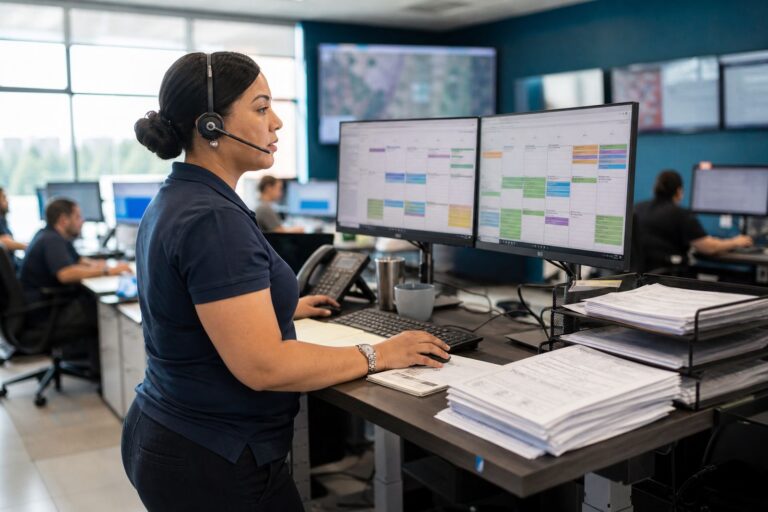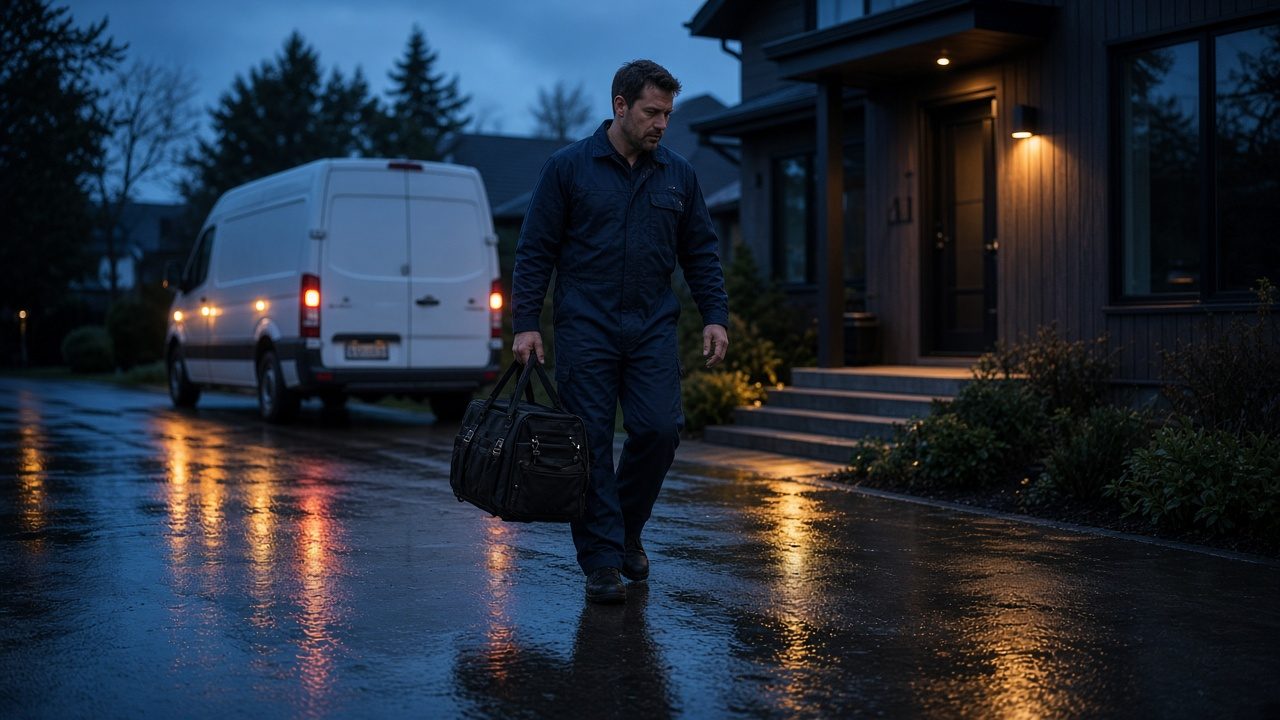

The phone rings at 7:40 a.m. A homeowner is standing in an inch of water in the basement and can’t find the shutoff. Line two is a restaurant with a backed-up floor drain an hour before lunch service. Line three is a tenant who has had no hot water since last night. Your plumbers are already heading to booked installs, and every caller believes their job is the emergency.
That is the moment plumbing emergency dispatch either works or falls apart. Without a consistent triage process, the loudest caller gets the first truck, the wrong plumber shows up without the right parts, and the scheduled customers you promised yesterday get bumped without a word. This guide walks through a practical, plumbing-specific way to triage emergency calls: what to ask on the first call, how to sort urgency, who to send, and what to tell the customer while they wait.
If you want the broader daily dispatch routine, start with our Busy-Day Playbook for Field Service Dispatchers. This article zooms in on one thing: the plumbing emergency call, from the first ring to the plumber arriving.
Why Plumbing Emergencies Need a Consistent Triage Process
Plumbing urgency is unusually hard to judge over the phone. A “leak” can be a slow drip under a vanity or water coming through a ceiling. A “clog” can be one slow sink or a main line backing sewage into a basement. Customers describe symptoms, not causes, and they are often stressed when they call.
A written triage process gives every person who answers the phone the same questions, the same way of sorting calls, and the same rules for when to interrupt the schedule. It protects three things at once:
- The customer’s property, by getting active water damage handled before cosmetic problems.
- Your schedule, by stopping every “urgent” call from automatically blowing up booked work.
- Your plumbers, by sending them in with the right information, tools and expectations.
What Makes a Plumbing Call an Emergency?
Every shop defines emergencies a little differently based on its services, its customers and its after-hours policy. Still, most plumbing emergencies share one or more of these traits:
- Water is actively escaping and can’t be stopped, such as a burst supply line, a failed water heater tank or a broken pipe in a wall or ceiling.
- Sewage is backing up into a home or business, especially from a main line.
- The property has no usable water or no working toilet, particularly when the only bathroom is out of service.
- There is a possible safety hazard, like water near electrical panels or outlets, or a customer who mentions a gas smell near a gas water heater.
- A business can’t operate, such as a restaurant kitchen drain or a building’s only restroom.
- Vulnerable occupants are affected, such as elderly residents, infants or someone with medical needs who has no hot water or no working fixtures.
Just as important is knowing what usually is not an emergency: a dripping faucet, a running toilet that can be shut off at the fixture valve, a slow drain while other fixtures work, or a quote request for a remodel. These calls still matter, but they belong in the schedule, not in front of a flooded basement.
Questions Dispatchers Should Ask During the First Call
The first two minutes on the phone decide almost everything that follows. Keep a short script by every phone and in your intake form so nobody has to improvise.
- “Is water actively leaking or backing up right now?” This is the single most useful sorting question.
- “Where is it happening, and what is it near?” Basement, ceiling, kitchen, crawlspace; near electrical outlets, panels or appliances.
- “Do you know where your main water shutoff is, and have you been able to turn it off?” If they know where it is and can reach it safely, shutting it off may slow damage. Don’t push them to hunt for it in an unsafe area.
- “Is it one fixture or several?” Several drains backing up at once points to a main line problem rather than a single clog.
- “Do you have any working toilet and running water?”
- “What kind of property is it, and who will be on site?” Homeowner, tenant, property manager or business; access codes, pets and parking.
- “Is the equipment gas or electric?” For water heater calls, this changes who you send and what you say next.
- “Have you had work done on this recently?” A recent repair may mean a warranty callback, which can change both priority and billing.
Two safety lines belong in every script, and they should be phrased carefully. If the caller mentions water near electrical equipment, tell them to stay away from it and not to touch anything electrical while standing in water. If they mention a gas smell, tell them to leave the building and contact their gas utility or emergency services from outside. Your dispatcher is not there to talk anyone through a repair. Their job is to keep people safe and get accurate information to the plumber.
How to Classify and Prioritize Plumbing Calls
Once you have the answers, sort the call into a tier. The tiers below are an illustrative example, not an industry standard. Adjust the names, definitions and rules to match your services, staffing and after-hours policy.
| Example tier | Typical situations | Example dispatch rule |
|---|---|---|
| Tier 1: Active emergency | Uncontrolled water, sewage backing into living space, water near electrical, a business that can’t operate | Interrupt the schedule and send the nearest qualified plumber |
| Tier 2: Urgent today | Leak contained by a shutoff, no hot water, only toilet out of service | Fit into today’s board; move flexible work if needed |
| Tier 3: Soon | Slow drains, running toilets, minor drips | Book the next available standard slot |
| Tier 4: Planned | Replacements, remodel quotes, maintenance | Schedule normally or route to estimates |
Two rules keep tiers honest. First, the tier follows the answers, not the tone of the caller. Second, tiers can change. If a Tier 1 caller gets the main shut off and the water stops, that call may now be Tier 2. Re-check before you pull a plumber off another job.
How to Assign the Right Plumbing Technician
Nearest is not always right. A plumber who is ten minutes away but has no drain machine on the truck can’t clear a main line backup. Before you assign, check four things:
- Skill and license fit. Main line clearing, water heater work, gas lines and commercial jobs often call for specific experience or licensing.
- Equipment and parts on the truck. Jetter, camera, common water heater parts, repair couplings.
- Current job status. Can they safely wrap up and leave, or are they mid-repair with a customer’s water off?
- Drive time. Realistic travel time, not straight-line distance.
Pass along everything the caller told you: symptoms, shutoff status, access notes, safety flags and any history on the property. A plumber who arrives knowing “main shut off at 7:52, three drains backing up, basement access through side door” starts working sooner than one who has to repeat the interview.
When to Pull a Plumber Off Scheduled Work
Decide this in advance so dispatchers aren’t making it up under pressure. A common approach is to only interrupt scheduled work for your top tier, and only when the scheduled job can be safely paused or moved. Whoever gets bumped gets a call, not a no-show.
Handling Multiple Plumbing Emergencies at Once
Storms, cold snaps and holiday weekends can bring several emergencies inside the same hour. When that happens:
- Stabilize before you dispatch. Call back any caller who hasn’t shut off their water and confirm what they can safely do now.
- Re-rank by current severity. Active water and sewage go first, contained leaks next.
- Split by skill. Send drain specialists to backups and water heater experienced plumbers to tank failures instead of sending whoever is free next.
- Be honest about capacity. If you can’t reach someone today, say so and let them decide whether to wait.
- Name one person as dispatch lead. Two people reshuffling the board at once is how jobs get double-booked or lost.
A Realistic Example
At 4:15 p.m. on a freezing Friday, a dispatcher has three calls: a burst pipe in a garage with water shut off, a laundromat with a backed-up floor drain, and a family with no hot water. The burst pipe is contained, so it becomes urgent-today. The laundromat is losing business and has sewage risk, so it goes first to the plumber with a drain machine. The no-hot-water call gets a call back with a realistic window and a question about whether anyone in the home has medical needs, which could move it up.
Customer Communication and Realistic Arrival Expectations
People in a plumbing emergency mostly want to know two things: someone is coming, and roughly when. Give them both, honestly.
- Confirm the plan before you hang up: who is coming, what they’ll do first, and what the customer can safely do in the meantime.
- Give a window, not a promise. Base it on the plumber’s actual current job and drive time. Never quote a time you haven’t checked.
- Update when things change. A short “running later than planned, new window is X” message keeps trust far better than silence.
- Explain emergency pricing up front if your shop charges after-hours or emergency rates, so there are no surprises on the invoice.
For the wider picture of confirmations, ETAs and follow-up messages, see our guide on field service customer communication.
A Practical Plumbing Emergency Dispatch Checklist
Print this, pin it by the phone and add it to your intake form:
- Answer and capture name, address, callback number and property type.
- Ask: active water or backup? Where? Near electrical?
- Give safety guidance (stay away from electrical in water; leave and call the gas utility or emergency services if there’s a gas smell).
- Ask about main shutoff status, only if it’s safe for them to reach.
- Assign an example tier based on the answers.
- Check plumber skill, truck equipment, current job and drive time.
- Assign and send full notes to the plumber.
- Give the customer a realistic window and set expectations on pricing.
- Notify any scheduled customer whose appointment moves.
- Update the customer if the window changes.
- After the job, note the cause and outcome on the customer record.
Common Plumbing Dispatch Mistakes
- Letting tone decide priority. The angriest caller is not always the most urgent one.
- Sending the closest plumber without checking the truck. A second trip for equipment wastes more time than a slightly longer drive.
- Forgetting the bumped customer. Moving a scheduled job without calling turns one emergency into two unhappy customers.
- Coaching repairs over the phone. Keep phone guidance to safety and shutoffs. Leave the repair to the plumber.
- Promising arrival times you haven’t checked. An honest window beats an optimistic one you miss.
- Not writing anything down. If the details live only in the dispatcher’s head, the plumber and the next shift start from zero.
How Scheduling and Dispatch Software Supports the Workflow
A triage process works on paper, but it’s easier to keep when intake, the board and customer updates live in one place. ServLoom’s call booking tools help you log phone requests with the details dispatch needs, and the dispatch board shows who is available, en route or running behind, with assignment based on skills and location. Plumbers can see customer history and site notes in the technician app, and customer communication features help keep homeowners informed as timing shifts.
Software doesn’t decide what counts as an emergency. Your rules do. What it can do is make those rules easier to follow on a chaotic day. You can see how this fits plumbing work on our plumbing software page.
Frequently Asked Questions
What is plumbing emergency dispatch?
It is the process of taking an urgent plumbing call, judging how serious it is, and sending the right plumber with the right information, while keeping the customer and the rest of the schedule informed.
How do you prioritize plumbing service calls?
Ask consistent questions about active water, sewage, safety hazards and whether the property has usable fixtures, then sort calls into tiers your shop has defined in advance. Base priority on the answers, not on how upset the caller sounds.
What should a dispatcher tell a customer while they wait?
Give safety guidance, such as staying away from electrical equipment near water, shutting the main water valve only if they know where it is and can reach it safely, and leaving the building and calling the gas utility or emergency services if they smell gas. Then give a realistic arrival window.
Should every emergency call interrupt scheduled work?
Usually not. Many shops only interrupt booked work for their highest tier, and only when the scheduled job can be paused or moved safely. Anyone whose appointment moves should get a call.
How do you choose which plumber to send to an emergency?
Check skill and licensing, the equipment and parts on the truck, the plumber’s current job status and realistic drive time. The nearest plumber isn’t always the right one.
Is emergency triage different from normal scheduling?
Yes. Scheduling plans the day ahead. Emergency triage decides, in real time, which calls are allowed to change that plan. For the planning side, see our field service scheduling best practices.
Make Every Emergency Call Follow the Same Path
Plumbing emergency dispatch doesn’t need heroics. It needs the same questions on every call, clear tiers your team agrees on, assignment rules that check skill and equipment, and honest updates to customers. Write the process down, train everyone who answers the phone, and review a few emergency calls each month to tighten it.
If you’d like to see how intake, dispatch and customer updates can run from one board, book a demo or compare plans on our pricing page.